The Project
Recovering the story behind the raids
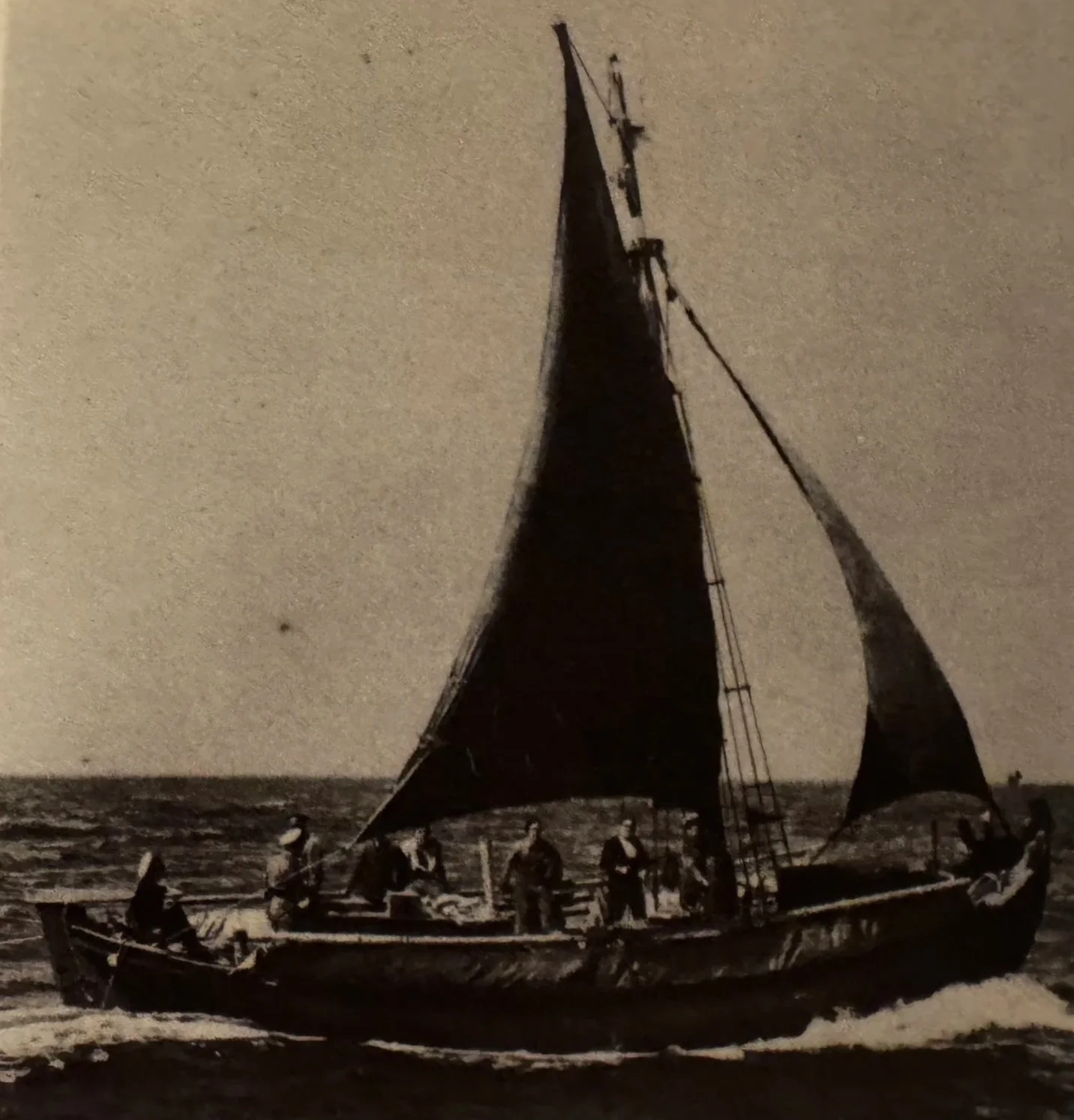
The caique was the flotilla’s perfect disguise: a traditional, heavy-timbered working boat commonly seen throughout the Aegean. Beneath its ordinary appearance could be hidden fuel, weapons, equipment and passengers absent from any manifest.
The project examines not only what the flotilla achieved, but how it worked.
Improvisation as strategy
Standard Bolinder engines were loud enough to reveal a vessel’s position. The flotilla’s solution was to repurpose 7.5-litre Leyland diesel engines from Matilda II tanks, delivering approximately 140 horsepower and greatly increased range.
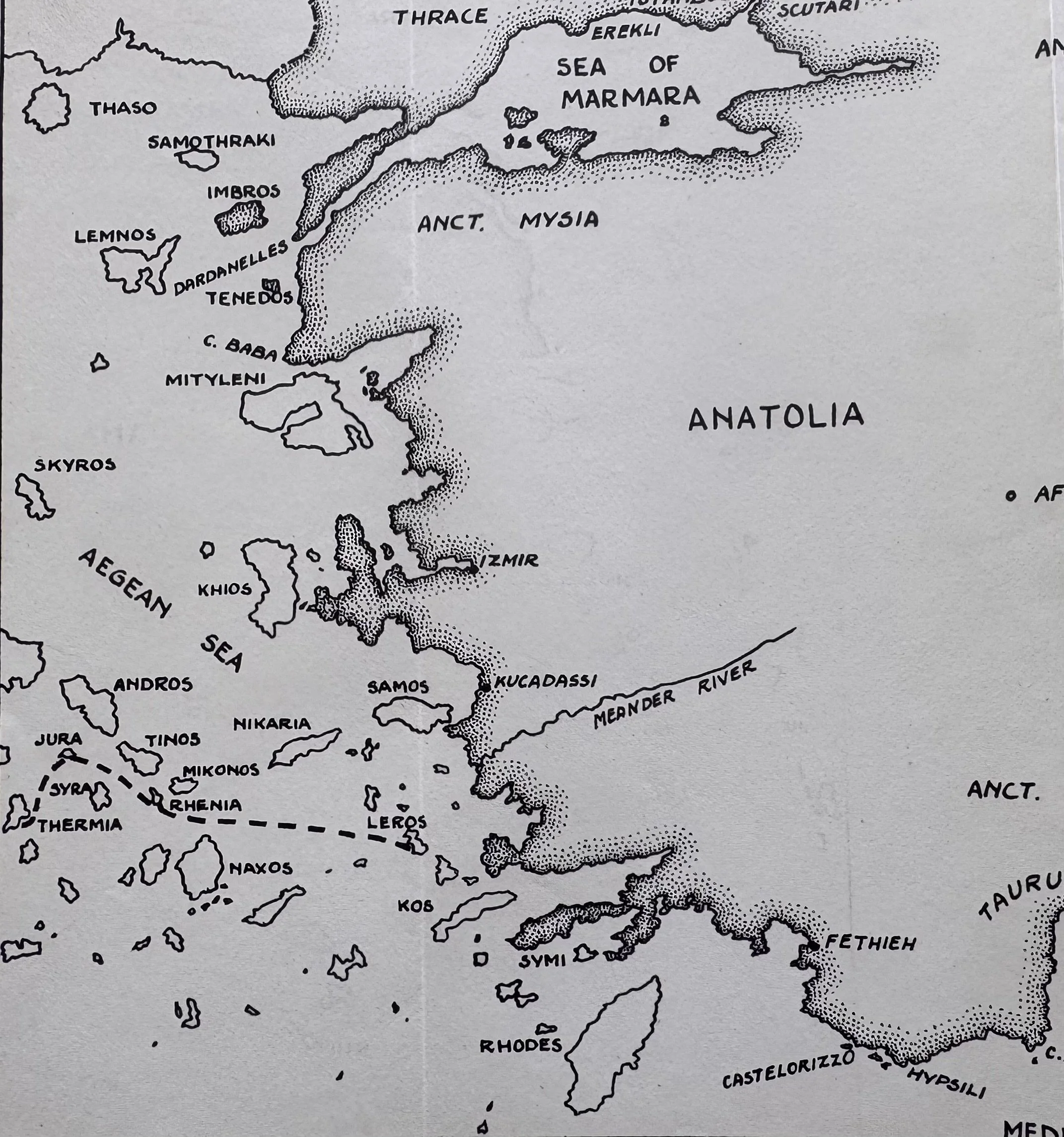
Navigation was frequently a matter of pilotage rather than conventional open-ocean navigation. Young officers steered between islands at night using way-markers, landmarks, silhouettes and recycled aeronautical equipment.
During daylight, lowered masts, nets and poles distorted the boats’ outlines. Camouflage netting with green fringes imitated the sea while rock-and-stone colours merged with the shoreline ensuring the Levant Schooner Flotilla’s caiques could remain hidden in remote coves and bays during daylight hours and thereby avoid detection.
Neutral Turkish waters provided the flotilla with sheltered bays and anchorages close to the occupied Greek islands—a vital back door into the operational area.
The people behind the story
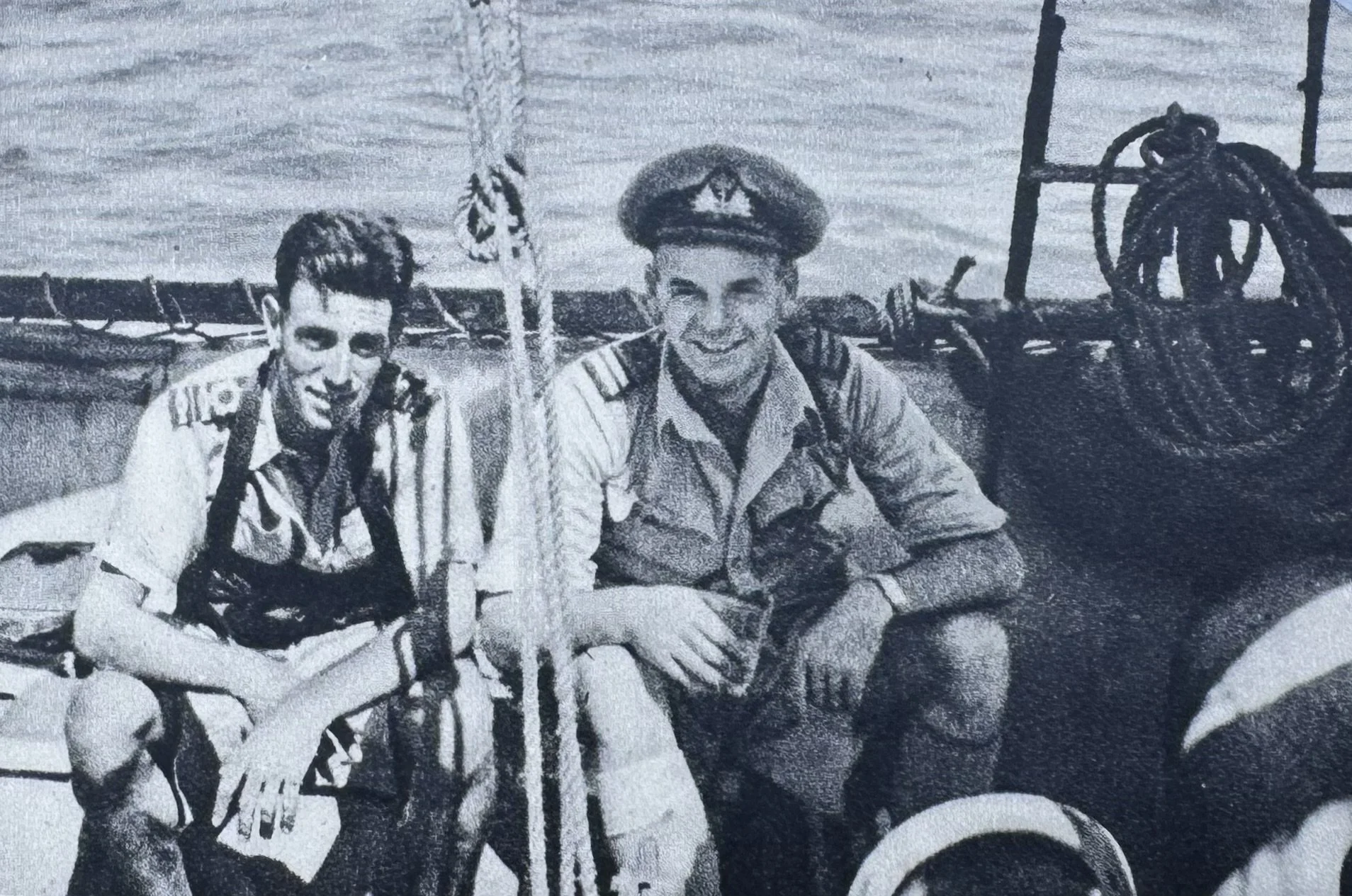
The project follows Adrian Seligman and the flotilla’s sailors, alongside the special-forces teams they transported. Operations included carrying Charlie Saxton’s LRDG patrol to Kythnos in September of 1943 and supporting Andy Lassen’s 1944 SBS raid on Santorini.
This is an evolving research project. Its purpose is to bring together the vessels, personnel, engineering, camouflage and operational history of a remarkable—and often overlooked—Royal Navy unit.
A note from the author
This project arose out of an unlikely set of circumstances.
When dropping my daughter to university in California in 2013, I happened upon Bell’s Books on Emerson Street, Palo Alto. Bell’s is one of those tremendous vendors of written word; vast tracks of new releases and an even vaster inventory of secondhand books. Established in 1935, it remains an unconquered outpost of print in the heartland of digital media, Silicon Valley.
In the September of 2013, reflecting my own great interest in all things Greek and the Aegean, I found a work at Bells’ entitled War in the Islands by Adrian Seligman. Reading the blurb on the back cover, I purchased the book. It promptly went to the bottom of my suitcase on the return journey to Australia and from there onto my bookshelf. There it remained for eight long years spine unbroken. What motivated me to finally pull it down from the shelf I do not recall. But when I did, I read one of the short stories that comprise the collection: it was an account of an interaction between a recon team delivered to Crete by the Levant Schooner Flotilla and a favourite of mine, the famed SOE operative, Patrick Leigh Fermor.
The story described Leigh Fermor as stumbling down a hillside in red pyjamas, making good his escape from a village where he had slumbered-overnight, and where now, a German patrol was entering it. I was struck how comedic was this description in what was otherwise an absolutely deadly serious activity. After all, any British or Commonwealth serviceman raiding behind German lines was subject to the Commando order: that is, you would be shot.
I had received Patrick Leigh Fermor’s two volume set of his walk from the Hook of Holland to Constantinople from my friend Damien (Jed) O’Brien, for my 40th birthday. That gift began a still enduring love affair with the author and his wartime activities. In turn, this led me to an examination of the role of irregular military operations on the island of Crete. I discovered Crete was starting a gun for so much that followed in the Eastern Mediterranean, a template for covert action and activity across the theatre where one had to solve for a littoral theatre of operations characterised by long sea passages; and, to adapt offensive actions where men and materiel were scarce. Reading Seligman opened my eyes to the extraordinary adaptation to the theatre and capacity for improvisation the Levant Schooner Flotilla possessed. Captivated by their activities, and the ambition and resolve shown by the flotilla, encouraged me to read more. To my great delight, I found a story of extraordinary individuals, including Commander Skipper Pool head of SOE para naval operations; Pool is an absolutely remarkable character and my own belief is that there’s not enough written about him nor has his contribution to the overall conflict being properly recognised. Beyond Francis Grant Pool, there is Mike Cumberlege, and John Pendlebury who can rightly claim to be he progenitors of using seaborne incursions to wage irregular warfare in the Eastern Med. After reading about Cumberlege, Pendlebury, Beckingsale, John Campbell and Seligman, I believed this project warranted a more rigorous academic focus. With the activities of the Levant Schooner Flotilla at it’s core, it now forms the basis of my MA at the University of Buckingham in the Military History program.
- John Wilson